Breath, Sound or Sight: Three Ways to Anchor Attention
Choose a breath, sound or sight anchor for a mindful pause, with clear ways to adjust when one feels distracting, strained or uncomfortable.

Which anchor should you choose when a mindful pause feels awkward: breath, sound or sight? For a breath, sound or sight anchor, start with the detail that feels easiest to notice without straining. Each gives your attention a simple place to return to; none requires you to empty your mind or hold concentration perfectly.
The same focus will not suit every moment. Breath can feel too personal, sound can be hard to pick out, and a visual point can become an exercise in staring. Treat the difficulty as information and adjust the anchor instead of deciding you are “bad at mindfulness”.
Choose an anchor that asks little of you
A mindful anchor is a present-moment detail you can notice again and again. It might be the movement of breathing, a sound already in the room, or the colour and shape of something in view. Your mind will wander. The practice is noticing that it has wandered and gently returning, not preventing thoughts from appearing.
Think of an anchor as a handrail on a familiar staircase. You are not trying to stop and inspect the rail; it simply gives your attention somewhere steady to touch as you continue. Keep the pause brief and comfortable. Sit or stand as you are, and let your eyes stay open if that feels better.
Try one anchor at a time rather than comparing all three while you practise. Pick the option that seems easiest in the moment, stay with it for a short pause, and notice whether it feels manageable. If it becomes uncomfortable, choose another focus or stop. The point is to support attention, not to make yourself endure a particular sensation.
Breath feels forced when you start controlling it
Focusing on breathing can quickly become a project: taking larger breaths, slowing them down or checking whether each one feels right. That effort may leave you more tense than before. If you catch yourself directing your breath, there is no need to correct it. Let it move as it is and shift attention to a small, ordinary sensation, such as air passing near the nostrils or the rise and fall of your clothing.
You do not need to take deep breaths. Simply notice one breath arriving and leaving, then let the next one be whatever it is. If tracking the breath feels uncomfortable, stop using it as your anchor. Sound or sight can offer a little distance from bodily sensations.
Say you are sitting on a bench before an appointment and notice your breathing has become the centre of attention. Open your eyes, look at the dark edge of the bench beneath your hands, and note its shape without changing your breath. The observable result is modest: your attention has a neutral object to return to, even if your thoughts continue.
Sound disappears when you strain to find it
Quiet does not always make sound an easy anchor. A room may seem silent, or a nearby noise may be so sharp that it captures all your attention. Trying to hunt for faint sounds can add tension, while demanding silence can turn ordinary household noise into an interruption.
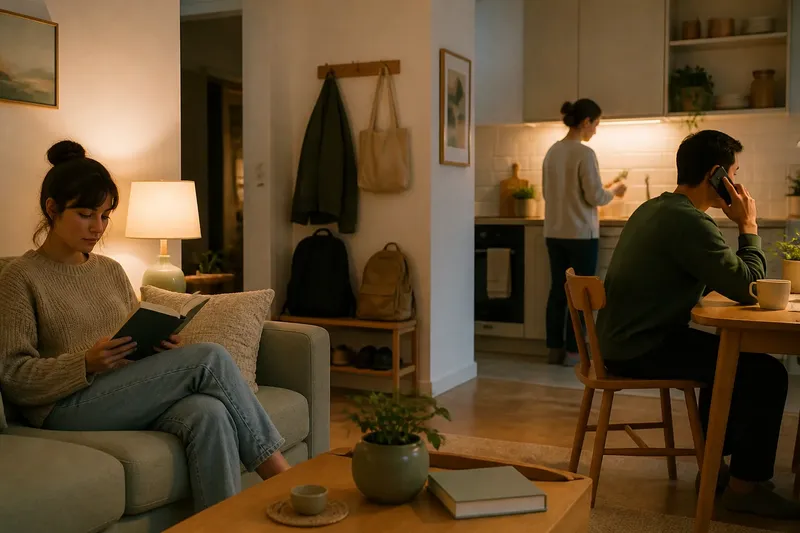
Begin with whatever is already audible, such as a fan, distant traffic, birds outside or the soft shift of a chair. Notice a sound’s texture or whether it grows louder and softer, without needing to name its source. If one noise feels intrusive, do not force yourself to stay with it. Let attention widen to the general sound of the room or choose a visual anchor instead.
If you cannot hear anything that feels comfortable, sound is simply not the right choice for that pause. You are not failing to find a hidden signal. A visible object or a neutral detail of breathing may be easier to stay with.
Sight turns into staring when the target is too narrow
A visual anchor can be useful when you want to keep your eyes open, but a tiny target invites effort. Staring at a small mark, trying not to blink or fixing your gaze until your eyes feel tired is not necessary. Pick something ordinary and let your gaze rest rather than lock.
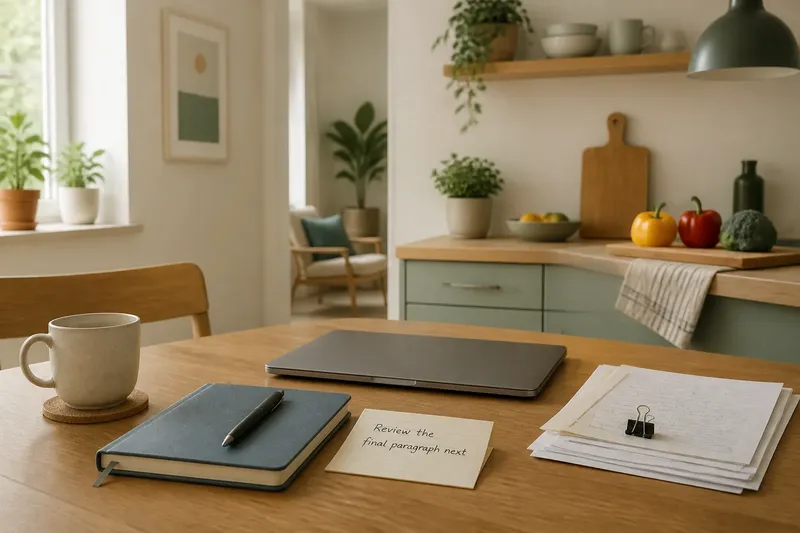
You could notice the broad outline of a mug, the changing light on a wall or the green of a plant. Include the space around the object; peripheral vision counts. If the object feels emotionally loaded or visually busy, look elsewhere. A neutral patch of wall or the edge of a table may be more comfortable.
With sight, the aim is not to study every detail. Notice a simple feature, such as a curved handle or a patch of colour, and return to it when attention wanders. If your eyes become strained, blink, soften your gaze or switch to sound.
How can you match an anchor to the moment?
Which anchor works best in a noisy place?
Try sight if there is a calm, neutral object in view, or notice the overall sound rather than a single voice or sharp noise. If neither feels comfortable, pause without choosing a formal anchor and return to an ordinary activity.
What if thoughts keep interrupting?
That is part of the practice, not a sign that the anchor has failed. Notice that attention has moved, then return to one simple feature of the breath, a sound or an object without criticising yourself.
Can you change anchors halfway through?
Yes. If your chosen focus becomes uncomfortable or hard to notice, switch to another one. A mindful pause does not need to follow a fixed sequence.
How do you know when to stop?
Stop when the pause feels complete, or sooner if continuing feels uncomfortable. You might then return to what you were doing, with no requirement to feel calm or different.
Choose again when the setting changes
One anchor need not become your permanent favourite. The breath may feel straightforward while sitting at home but too noticeable on a crowded train. Sound may be easy in a quiet garden and difficult beside a busy road. Sight may help during a waiting-room pause, but feel tiring if you have already been concentrating on a screen.
For a simple choice, ask yourself what feels easiest to notice right now: a natural breath, an ordinary sound or a neutral visual detail. Start there. If you notice strain, distraction that feels too strong or discomfort, adjust the focus rather than pushing through it.
Breath, sound or sight can each support a mindful pause, but the best anchor is the one that meets the moment gently. A sound does not have to be soothing, a breath does not have to be deep, and an object does not need to be beautiful. Let the focus be plain enough to return to, then give yourself permission to carry on.